BMW i4 vs Lexus ES
The Lexus ES is cheaper to start, by $10,400. The BMW i4 goes further, with up to 307 mi of rated range versus 292 mi. The BMW i4 fast-charges faster (205 kW peak versus 150 kW, base trims). The first table compares base trims; every new trim of each is listed further down.
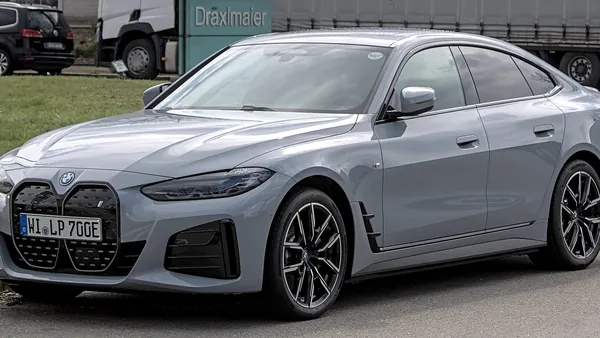
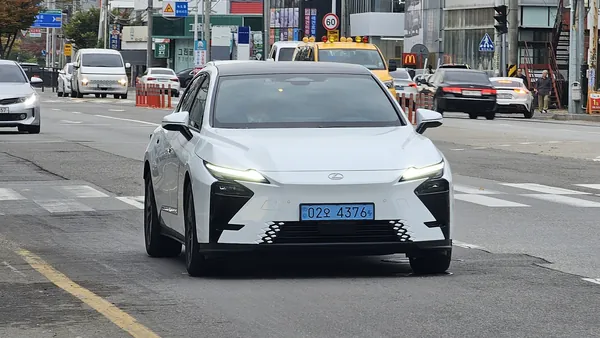
Which one should you pick?
Pick the BMW i4 if…
- you fast-charge on road trips: about 31 minutes for 10-80% on its quickest trim, versus 38 minutes for the Lexus ES (our estimate).
- you need cargo space: up to 45.6 cu ft, versus 18.3 cu ft for the Lexus ES.
- you tow: it is rated for up to 3,500 lbs, and we list no towing rating for the Lexus ES.
Pick the Lexus ES if…
- a lower starting price matters: it starts at $47,500, $10,400 less than the BMW i4 ($57,900).
- you want to plug straight into Tesla Superchargers: every new trim has a native NACS port, and the BMW i4 uses CCS1, so it needs an adapter.
Based on new trims of both models. How we compare
| Spec | BMW i4 | Lexus ES |
|---|---|---|
| Starting MSRP | $57,900 | $47,500 |
| Base trim | eDrive40 Gran Coupe RWD | ES 350e Premium FWD |
| Max rated range | 307 mi | 292 mi |
| Winter range (base, est.) | 227 mi | 216 mi |
| Battery (base) | 83.8 kWh | 74.7 kWh |
| Peak DC charging (base) | 205 kW | 150 kW |
| Est. 10-80% charge | ~31 min | ~38 min |
| 0-62 mph (base) | 5.6 s | 7.8 s |
| Drivetrains | RWD, AWD | FWD, AWD |
| Max cargo | 45.6 cu ft | 18.3 cu ft |
| Charging port | CCS1 | NACS |
Trim by trim
MSRP before destination, dealer fees and taxes. Winter range and 10-80% charge times are our estimates.
BMW i4: 3 new trims
| Trim | MSRP | Range | Winter est. | Battery | Peak DC | 10-80% est. | 0-62 mph | Drive |
|---|---|---|---|---|---|---|---|---|
| eDrive40 Gran Coupe RWD 2025-2026 |
$57,900 | 307-333 mi | 227 mi | 83.8 kWh | 205 kW | ~31 min | 5.6 s | RWD |
| xDrive40 Gran Coupe AWD 2025-2026 |
$62,300 | 268-287 mi | 198 mi | 83.8 kWh | 205 kW | ~31 min | 5.1 s | AWD |
| M60 xDrive Gran Coupe 2025-2026 |
$70,700 | 232-278 mi | 171 mi | 83.8 kWh | 205 kW | ~31 min | 3.7 s | AWD |
Lexus ES: 4 new trims
| Trim | MSRP | Range | Winter est. | Battery | Peak DC | 10-80% est. | 0-62 mph | Drive |
|---|---|---|---|---|---|---|---|---|
| ES 350e Premium FWD 2026-2027 |
$47,500 | 292-307 mi | 216 mi | 74.7 kWh | 150 kW | ~38 min | 7.8 s | FWD |
| ES 500e Premium AWD 2026-2027 |
$50,500 | 272-276 mi | 201 mi | 74.7 kWh | 150 kW | ~38 min | 5.4 s | AWD |
| ES 350e Luxury FWD 2026-2027 |
$55,900 | 292-307 mi | 216 mi | 74.7 kWh | 150 kW | ~38 min | — | FWD |
| ES 500e Luxury AWD 2026-2027 |
$58,900 | 272-276 mi | 201 mi | 74.7 kWh | 150 kW | ~38 min | — | AWD |
Compare every spec side by side →
How we compare
We call out a difference only when it is big enough to matter: a starting price at least 5% lower, at least 20 mi (and 5%) more rated range, a 10-80% fast charge at least 5 minutes quicker, at least 3.5 cu ft (and 10%) more cargo space, at least 1,000 lbs (and 15%) more towing, or a feature one model offers on at least one trim and the other on none: all-wheel drive, a third row, a native NACS port, V2L, or a heat pump as standard on every trim. We compare new trims, or every trim for a model sold used only. Winter range and charging times are our estimates. We found 5 such differences between these two.